
Over the past decade, organizations have invested heavily in security tools, cloud platforms, automation, and monitoring. Yet 2026 brings a different expectation from customers, partners, and regulators: not perfection, but resilience. Businesses are now judged not only on how well they prevent incidents, but on how quickly they recover, how reliably they operate, and how confidently they communicate during disruptions.
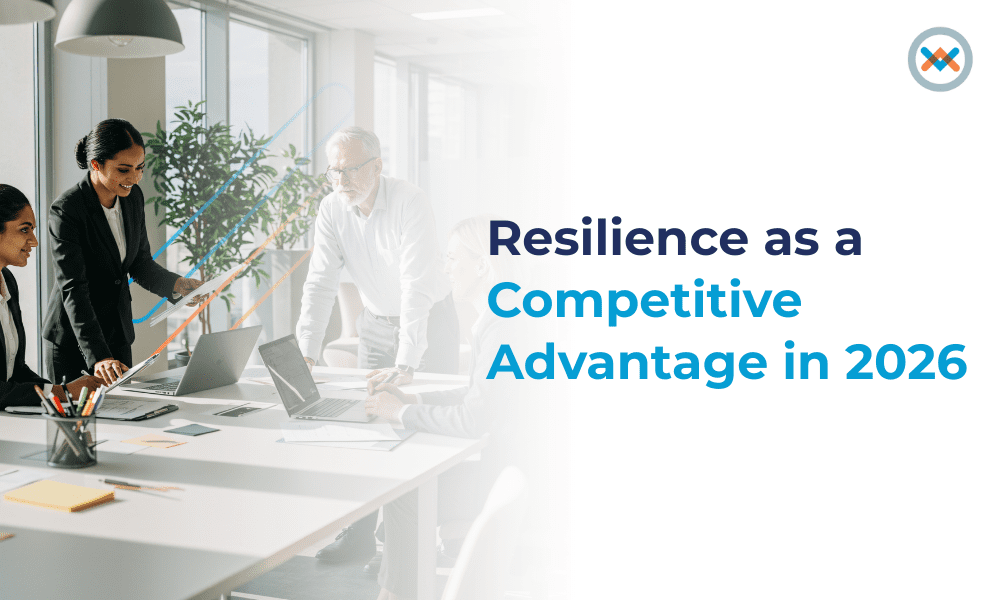
Security can reduce threats, but resilience protects trust. In a world where outages, supply-chain failures, and service disruptions are part of the landscape, resilience becomes more than an IT metric — it becomes a competitive advantage. The companies that recover fastest earn stronger loyalty, maintain stability during uncertainty, and differentiate themselves in markets where reliability is increasingly rare.
Why Reliability Is the New Reputation
A decade ago, downtime was considered a technical inconvenience. Today, it directly impacts brand equity. Customers expect uninterrupted services across every industry — finance, retail, healthcare, SaaS, and even manufacturing. When outages occur, the public rarely distinguishes between what was “internal,” “external,” or “beyond control.” What they remember is whether a business remained reliable.
In 2026, reliability is no longer about uptime percentages alone. It’s about how quickly systems stabilize, how clearly teams communicate, and how well organizations maintain customer confidence during an incident.
Downtime now affects more than operations:
- Customer retention: In subscription-based services, even a short outage can push customers away, especially when they depend on the product for work or critical tasks.
- Brand trust: Delayed recovery or unclear communication can damage a reputation built over years. Trust erodes faster than systems recover.
- Sales and partnerships: Enterprises evaluate vendors not only on performance but on proven resilience. Slower responders lose competitive ground.
- Regulatory and compliance expectations: With stricter requirements around availability and incident reporting, resilience becomes part of compliance strategy.
In short: uptime contributes to reputation, but resilience defines it. Businesses that demonstrate predictable recovery, transparent communication, and consistent service continuity earn long-term loyalty — even when disruptions are unavoidable.
Turning Resilience Into ROI
Resilience may sound like a defensive strategy, but in practice, it drives measurable business value. When viewed through an executive lens, resilience protects revenue, reduces operational risk, and strengthens customer relationships.
Protects profitability
Every minute of downtime has a cost, whether through lost transactions, service credits, or stalled production. Faster recovery shortens that gap. Organizations with well-defined continuity plans, automated failover, and trained incident-response teams consistently reduce MTTR — and directly reduce the financial impact of disruptions.
Builds customer confidence
Users don’t expect flawless technology; they expect reliable outcomes. When an issue occurs and services return quickly, customers often remain loyal because the organization demonstrated competence, ownership, and control. The message is clear: “We take reliability seriously.”
Reduces operational risk
A resilient architecture distributes workloads, removes single points of failure, and ensures redundancy across critical components. Beyond technology, mature businesses also build resilience in processes — escalation flows, decision frameworks, and post-incident reviews that translate lessons into improvements. This decreases future incident frequency and severity.
Accelerates innovation
Teams move faster when they know their systems can handle issues without major disruption. When systems are built to recover quickly, organizations can release updates more confidently, adopt modern architectures, and experiment without fearing prolonged downtime.
Strengthens leadership decision-making
Executives are increasingly measured on operational stability. Whether during investor briefings or customer negotiations, leadership teams who demonstrate resilience maturity gain credibility — especially when clients require proof of continuity readiness before signing contracts.
In essence, resilience transforms from a cost center into an ROI driver. It reduces risk, protects revenue, improves satisfaction, supports innovation, and helps leaders make clearer, more confident decisions.
The Strategic Shift for 2026
Organizations are now moving resilience out of the IT silo and into the boardroom. In 2026, resilience becomes a leadership priority because it influences growth, market perception, and long-term competitiveness.
The strategic shift includes:
- Executive ownership of continuity planning: Resilience is no longer a purely technical function. It requires cross-department alignment and budget prioritization.
- Integrated communication frameworks: Clear messaging during incidents reduces confusion and preserves trust.
- Continuous testing as a standard practice: Fire drills, chaos testing, and scenario planning ensure teams remain ready.
- Investment in architecture maturity: Multi-region deployment, redundant systems, and modern cloud strategies prevent single points of failure from impacting customers.
- Data-driven decision-making: Leaders use recovery metrics, customer-impact data, and incident patterns to define roadmaps.
Resilience becomes strategic when it’s tied to customer experience, cost management, and market position — not just system uptime.
In 2026, Resilience Won’t Just Protect Your Business — It Will Define It
Organizations that treat resilience as an operational requirement risk falling behind. Those that treat it as a competitive advantage will move ahead with stronger customer trust, more predictable performance, and a reputation for reliability in an unpredictable environment.
Resilience is not about eliminating risk; it’s about preparing your business to recover quickly, communicate clearly, and continue delivering value — no matter what happens.
See how Wowrack helps businesses turn resilience into a measurable strategic advantage across operations and reputation.