
Managing IT infrastructure entirely in-house can be difficult, especially as a business grows. According to CIQ, it takes an average of 277 days to identify and contain a security breach. This highlights the time and expertise needed to manage IT environments and respond to security threats. A managed IT services provider can help businesses handle infrastructure, cloud environments, and security while maintaining reliable IT operations.
What is Managed IT Service?
A managed IT service is provided by a third-party provider that handles IT responsibilities, often referred to as an MSP, or managed service provider. An MSP manages, monitors, and supports IT systems on an ongoing basis based on business needs. Instead of handling everything internally, a company can partner with an MSP for continuous technical expertise and infrastructure management.
MSP vs MSSP: What is the Difference?
A managed service provider (MSP) handles day-to-day IT infrastructure and operations, including networks, cloud, systems, and technical support. A managed security service provider (MSSP) focuses specifically on security services, including security monitoring, threat detection, vulnerability management, and incident response. The two can overlap, since many providers offer both managed IT and security services as part of a broader technology strategy.
Why Do Businesses Need Managed IT Services?
As IT environments become more complex, many companies do not have the resources to manage everything effectively on their own. This is where managed IT services come in. They give companies access to ongoing technical support and expertise without having to build and maintain an internal IT team for every function.
Benefits of Managed IT Services
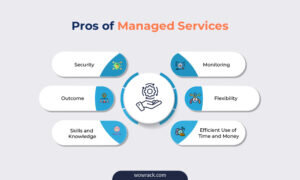
Managed IT service providers can offer both operational and financial benefits for companies that need consistent IT support as their infrastructure grows.
Cost Savings
Managed services provide technical expertise without the cost of building an in-house team, since hiring, training, and retaining IT staff across every area of infrastructure can get expensive. Companies also benefit from predictable service costs, which makes IT budgeting easier.
Greater Efficiency
Proactive monitoring and regular IT management help identify issues before they become larger problems. Providers monitor systems, perform regular maintenance, and resolve problems as they surface, which helps reduce downtime and keep employees productive.
Enhanced Security
For businesses without a dedicated security team, working with an external provider gives access to monitoring, system updates, access control management, and other security measures. This matters because security requires constant attention as threats and vulnerabilities continue to change.
Focus on Core Operations
Outsourcing infrastructure and technical tasks free up time for internal teams to focus on other company priorities, since managing IT can otherwise take up a significant amount of their time.
What Managed IT Services Provide
The exact scope of service depends on the provider and the needs of the business, but common services include the following:
Infrastructure and Network Management
To keep systems available and performing as expected, an MSP can help with monitoring and managing servers, networks, and other IT infrastructure. This also includes system updates, troubleshooting, and maintenance.
Cloud Management
As companies add applications, workloads, and resources, cloud infrastructure becomes harder to manage, and managed IT services can help with that by offering cloud infrastructure management, monitoring, resource administration, and ongoing technical support.
Cybersecurity and Monitoring
Beyond security monitoring, some providers also offer vulnerability assessment, penetration testing, and other cybersecurity services to help identify and address potential threats.
Backup and Disaster Recovery
Data loss and infrastructure failure are common causes of business disruption. These can be prevented by partnering with an MSP, since they provide managed backup and data loss services, helping businesses prepare for and recover from an incident.
Help Desk and Technical Support
When employees run into system, connectivity, or application access issues, they often need assistance to resolve them. Managed IT services can provide access to experts who can troubleshoot problems and offer ongoing support.
Who Needs Managed IT Services?
Managed IT services can benefit businesses of nearly any size, particularly those with limited internal IT resources, growing infrastructure, or an increasingly complex technical environment. The signs below can help clarify when that need becomes urgent enough to act on:
When Should You Consider Managed IT Services?
There is no single determined time for when a business needs an MSP, but a few signs can indicate that a business may benefit from additional MSP support:
- Internal IT team is overloaded: routine maintenance and support take up too much time, leaving little room to focus on bigger projects.
- Infrastructure is growing: managing IT becomes harder as more servers, cloud workloads, applications, or locations are added.
- Downtime is becoming a problem: employees or clients are affected by ongoing technical issues.
- 24/7 monitoring is needed: IT systems need to be monitored outside of normal working hours, not just during them.
- Specialized expertise is needed: the internal team lacks experience in an area like cloud infrastructure, security, or disaster recovery.
- Predictable IT costs are needed: budgeting for internal infrastructure and staffing is becoming harder to manage.
When these situations come up, an MSP can provide additional capacity and expertise while still allowing the company to decide which IT functions to keep in house.
Managed IT Services in the US
Many businesses in the US work with a managed service provider so they do not have to manage every technical function internally. Partnering with the right provider can help a company manage infrastructure, cloud, security, and other technical needs according to its specific requirements.
Why Wowrack for Managed IT Services?
Wowrack partners with businesses to provide managed IT services based on their specific needs, whether that involves infrastructure management, technical management, or both. Wowrack also covers cloud, monitoring, security, backup and DR management, and other technical needs.
With more than 20 years of experience in IT infrastructure management, Wowrack combines cloud expertise with data center and managed service capabilities to support businesses across a range of needs and requirements.
Not sure which service your business needs? You can schedule a free consultation with Wowrack's team to discuss your challenges and goals.
Conclusion
Managed IT services give businesses access to technical expertise while reducing the burden of managing an IT environment entirely in house. An MSP can support every stage of IT need, from infrastructure and cloud management to security, backup, and technical support.
Ultimately, the key is choosing the right provider, one that aligns with your infrastructure, security needs, and operational requirements. For companies that need consistent IT support and infrastructure expertise, partnering with a managed service provider is a practical solution that keeps IT operations running smoothly while allowing internal teams to stay focused on core business goals.